Lighting design · 6 min read
A Guide to Wedding Reception Lighting
Lighting should support the room’s architecture, photographs, and emotional rhythm—not compete with them.
By Kyd Sanchez · DJ KYD & Co.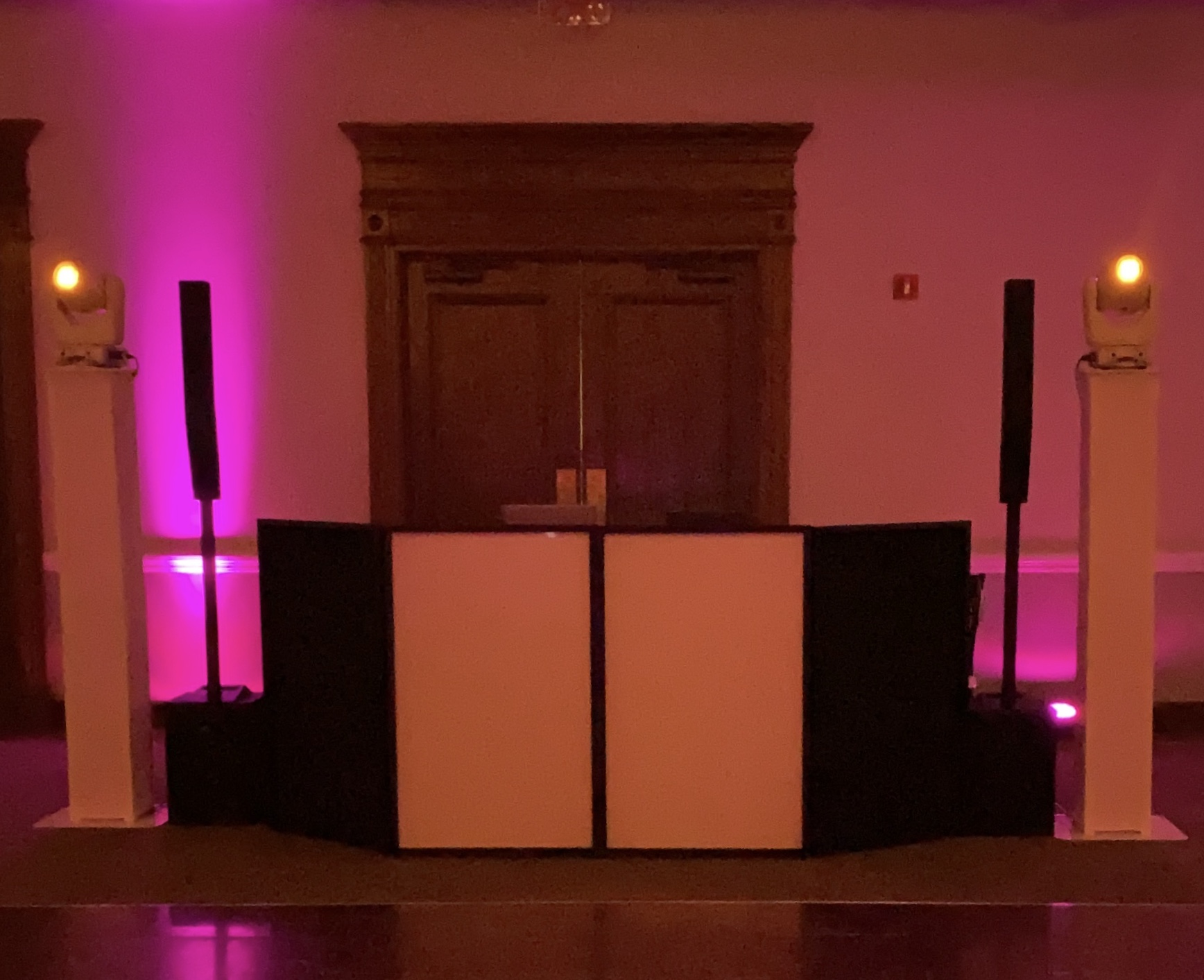
Dance-floor lighting and uplighting are different
Dance-floor lighting concentrates movement where guests are dancing. During dinner it can remain restrained, then build in color and motion once the party opens.
Uplighting places controlled light around the room’s perimeter to emphasize walls, columns, draping, or architectural details. Wireless battery-powered fixtures can reduce visible cabling in appropriate spaces.
Intelligent lighting adds direction
Programmed moving fixtures can support introductions, first dances, and high-energy moments. Thoughtful programming is different from leaving lights in constant motion all evening.
A custom monogram can add the couple’s names, initials, or design to a wall or dance floor, subject to surface, distance, and venue conditions.
Ask how it will look in photographs
Color choice, fixture placement, haze policies, ceiling height, ambient light, and photographer preferences should be considered together.
The strongest lighting design moves through the evening: welcoming during cocktails, elegant through dinner, cinematic for signature moments, and energetic when the dance floor is ready.